

It washes your hands, your dishes, your body, your floors, and even your dog or baby! Here is what Castile soap actually is, whether it truly is the better choice, and simple recipes to make it stretch across your whole home.
If you have spent any time swapping out the plastic bottles under your sink, you have probably run into liquid Castile soap. It shows up in DIY cleaning recipes, in gentle baby washes, and in the routines of people who like to keep their ingredient lists short. It has a reputation for doing almost everything, which sounds a little too good to be true.
So let us walk through it honestly. Here is what Castile soap is, where it came from, whether it deserves its all-in-one reputation, and exactly how to use one bottle in a dozen different ways.
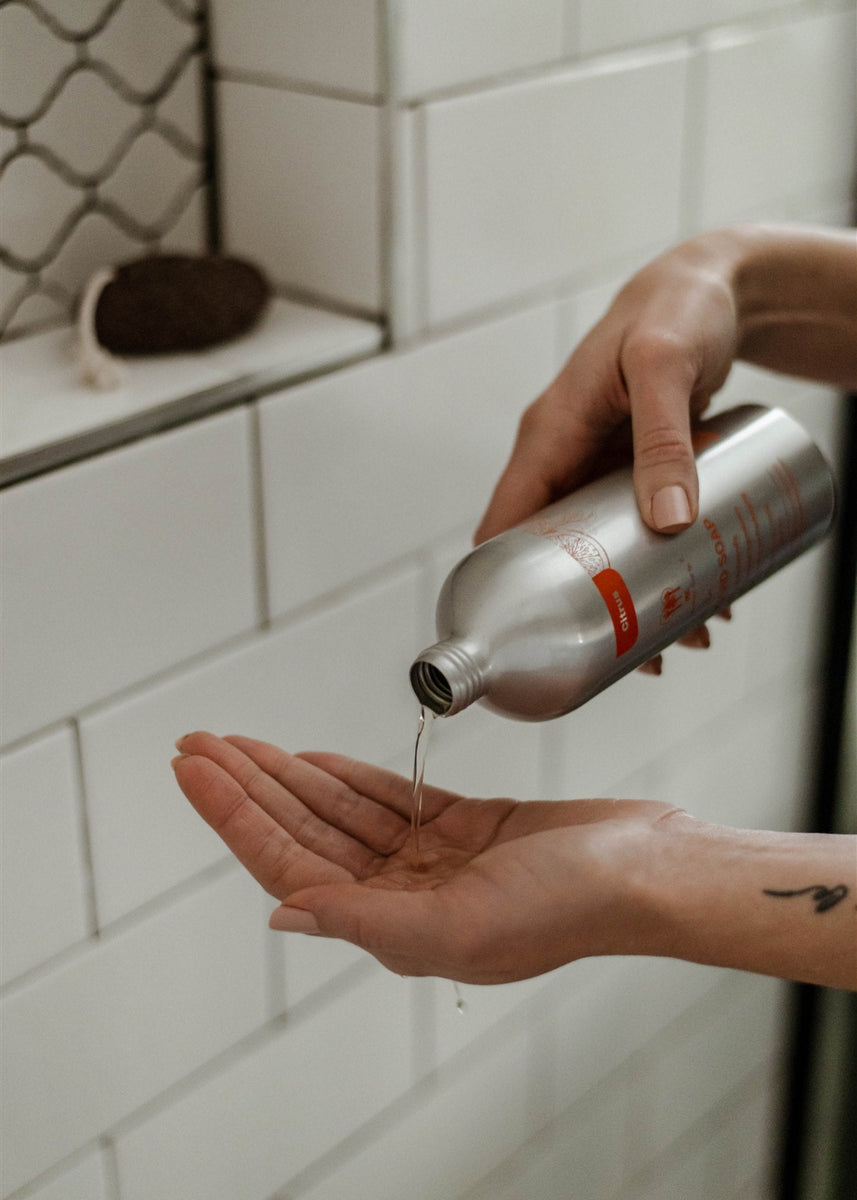
What is Castile soap?
Castile soap is a plant-based soap made from saponified vegetable oils rather than animal fats or synthetic detergents. In plain terms, natural oils are combined with an alkali, and through a process called saponification they turn into soap. What you are left with is a true soap with nothing synthetic doing the cleaning.
The name goes back to the Castile region of Spain, where soap was traditionally made from local olive oil. That olive-oil soap became so well known that "Castile" turned into the general term for any soap made from plant oils. Today the oils vary. Some brands use olive, some use hemp, and many blend several oils to balance lather, gentleness, and how well the soap rinses away.
Our liquid Castile soap is made with saponified oils of sunflower and coconut, a touch of vegetable glycerin, an essential oil blend for scent, and rosemary extract. That is the entire formula. No sulfates, no synthetic fragrance, and nothing you cannot pronounce.
Castile soap is not one specialized cleaner. It is a concentrated base that becomes whatever you dilute it into.
What makes Castile soap different from regular soap?
Most of the "soaps" in a typical home are not soap at all. Body washes, dish liquids, and many hand washes are built on synthetic detergents called surfactants, often derived from petroleum, then mixed with fragrance, dyes, preservatives, and thickeners. They clean well, but the ingredient list is long and the packaging is almost always plastic.
Castile soap works differently in a few ways that matter:
It is a true soap
The cleaning power comes from saponified plant oils, not from a lab-built detergent. That is a genuinely different chemistry, and it is why the ingredient list stays so short.
It is concentrated
A little goes a long way. Straight from the bottle it is strong, which is why most uses call for diluting it with water. One bottle replaces several single-use products, so you buy less and store less.
It is plant-based and biodegradable
Because it is made from vegetable oils, Castile soap breaks down naturally and is safe for septic systems when used as directed. It is also vegan and cruelty-free, which a lot of traditional soaps are not.
It is versatile by design
The same bottle can become hand soap, dish soap, body wash, or an all-purpose spray depending on how you dilute it. That is the whole appeal, and it is why one bottle can clear a shelf of plastic.
Is Castile soap the better soap option?
For most homes, yes, with a few honest caveats. Castile soap is one of the simplest ways to cut plastic, shorten your ingredient lists, and replace a handful of products with one refillable bottle. It is gentle, versatile, and genuinely multipurpose.
That said, no soap is perfect for every single job, and we would rather tell you the truth than oversell it. Here is the honest picture.
- One bottle replaces many, so you buy and store less.
- Short, plant-based ingredient list with no synthetic fragrance.
- Gentle enough for hands, body, and everyday cleaning.
- Biodegradable, vegan, and cruelty-free.
- Concentrated, so a small amount stretches a long way.
- It is naturally alkaline, so never mix it with acidic ingredients like vinegar or lemon. They cancel each other out and leave a curdled mess.
- In very hard water it can leave a filmy residue. A quick vinegar rinse afterward, used separately, clears it.
- Used undiluted it can feel drying, so dilution is your friend.
- It is a soap, not a disinfectant. It cleans and lifts grime rather than sanitizing.
None of these are dealbreakers. They are just the difference between using Castile soap well and getting frustrated with it. Once you know the alkaline rule and the right dilutions, it becomes one of the most useful things in your home.

DIY Castile soap recipes for your whole home
This is where Castile soap earns its keep. Below are simple recipes that turn one bottle into an entire cabinet of cleaners. For the soap and cleaner recipes, we love pairing the bottle with our amber foaming soap dispenser, which aerates the soap so you can dilute it further and it lasts even longer.
Foaming Hand Soap
Fill a foaming dispenser about one-half full with Castile soap, then top the rest with water. Pump and wash.
A gentle, non-drying hand soap that keeps a plastic bottle off your counter.
Gentle Dish Soap
Mix 1 part Castile soap with 1 part water in a foaming soap pump or squeeze bottle.
Cuts everyday grease on plates, glasses, and pots. For baked-on food, let dishes soak first.
All-Purpose Cleaner
Add 1 to 2 tablespoons of Castile soap to a 16 oz spray bottle. Fill with filtered or distilled water. Add 5 to 10 drops of essential oil if you want a scent.
Great for counters, tables, and sealed surfaces. Spray, wipe, done.
Foaming Body Wash
Mix 2 parts Castile soap with 1 part water. For a richer feel, stir in a teaspoon of a carrier oil like jojoba or fractionated coconut oil.
A simple, gentle body wash that rinses clean without synthetic fragrance.
Natural Soft Scrub
Combine 2 parts baking soda, 1 part hydrogen peroxide, and 1 part Castile soap into a paste.
Perfect for scrubbing showers, tubs, and sinks. Apply, scrub, and rinse well.
Simple Floor Cleaner
Add about 1 to 2 tablespoons of Castile soap to a bucket of warm water. Mop as usual, no rinsing needed for sealed floors.
Skip this one on unsealed stone or waxed wood, and always test a small spot first.
Fruit + Veggie Wash
Soak method: add a single capfull of Castile soap to a bowl of cool water, swish your produce, then rinse thoroughly with clean water.
Spray method (uses less water): mix about half a teaspoon of Castile soap into 2 cups of water in a spray bottle. Mist your produce, let it sit for about 30 seconds, then rinse well under running water.
Always dilute it and always rinse. Castile soap is a true soap, not a food-grade produce wash, so keep it diluted, keep the contact brief, and never leave it sitting on food.
Gentle Pet Shampoo
Mix a small amount of Castile soap with water, lather onto a wet coat, and rinse well. Keep it away from eyes and ears.
A simple, gentle wash for dogs. Check with your vet before using anything new on your pet. And avoid our peppermint Castile for this one, as peppermint essential oil can be toxic to dogs.
Gentle Plant + Pest Spray
Mix about half a teaspoon to three-quarters of a teaspoon of peppermint Castile soap per 1 cup of water, which scales to roughly 1 tablespoon per quart. Pour it into a spray bottle.
Spray directly onto the leaves, including the undersides where pests hide. Test one leaf first, spray in the early morning or evening rather than hot sun, and reapply every few days as needed.
Never mix Castile soap with vinegar, lemon, or other acids in the same bottle. Castile soap is alkaline, so acids break it back down into a greasy, curdled film. If a recipe calls for vinegar, use it as a separate rinse after the soap, not mixed into it.
That is really the whole learning curve. Learn the dilutions, keep the acids separate, and one bottle quietly takes over half the jobs in your home while sending far less plastic to the landfill.
Castile soap: your questions answered
These are the questions we get asked most often, straight from our inbox. If yours is not here, write to us and we will add it.
Using it around the house
Why can I not mix Castile soap with vinegar?
Castile soap is alkaline and vinegar is acidic. Put them in the same bottle and the acid breaks the soap back down into its oils, leaving a curdled, greasy film. Use vinegar as a separate rinse after the soap if you want both.
Is Castile soap a disinfectant?
No. It is a true soap, which means it cleans by lifting dirt, oil, and grime so they rinse away. That is different from sanitizing or disinfecting. For everyday cleaning it is more than enough. When you need to disinfect, reach for a product made for that job like hydrogen peroxide.
Why is my Castile soap leaving a filmy residue?
That is usually hard water. Minerals in the water react with true soap and leave a faint film on surfaces, dishes, or hair. Two easy fixes are to dilute the soap a little more, and to follow with a plain water or diluted vinegar rinse afterward, used separately rather than mixed in.
Why does it not lather as much as my old soap?
Conventional products often use synthetic foaming agents to create big, dramatic suds. Lather is not the same as cleaning power. A true soap lathers more modestly, and a foaming dispenser gives you that rich foam without adding anything synthetic.
Can I use Castile soap in my laundry or dishwasher?
You can add a small amount to a hand-wash load of laundry, though results vary a lot with water hardness. Please do not put it in an automatic dishwasher. True soap suds up far too much for the machine and you will end up with foam on your kitchen floor.
Is it safe for septic systems and drains?
Yes. Castile soap is made from plant oils and is biodegradable, so it is safe for septic systems when used as directed.
How long does a bottle last, and does it expire?
Because it is concentrated and most uses call for dilution, one bottle goes a long way. Stored somewhere cool and out of direct sunlight with the cap closed, it keeps for a long time. Trust your senses. If the scent or texture changes noticeably, it is time for a fresh bottle.
Using it on skin and hair
Is Castile soap gentle enough for sensitive skin?
For most people, yes, especially when diluted. It has no sulfates, synthetic fragrance, or dyes. That said, everyone is different, so patch test on a small area first if your skin tends to react, and dilute rather than using it straight from the bottle.
Can I use it on my hair?
You can, and plenty of people do. Dilute it well, because undiluted soap on hair can feel stripping. Since it is alkaline, hair often feels tangled or coated afterward, especially in hard water. A diluted apple cider vinegar rinse after washing, used separately, smooths the cuticle back down.
Is it safe for babies and kids?
Our Castile soap is lightly scented with essential oils. For little ones, dilute it generously, and keep it out of eyes. As with anything new, check with your pediatrician if you have concerns.
Using it on food and plants
Can I spray Castile soap on food at full concentration?
We do not recommend it. Castile soap is a true soap, not a food-grade produce wash, and we have not lab-tested it for direct, leave-on use on food. Always dilute it first, keep the contact brief, and rinse your produce thoroughly with clean water.
Can I spray my produce instead of soaking it to save water?
Yes, and it is a smart way to use far less water. Mix about half a teaspoon of Castile soap into 2 cups of water in a spray bottle, mist your produce, let it sit for about 30 seconds, then rinse well under running water. The two rules that matter are to keep it diluted and to rinse thoroughly.
How much Castile soap do I use per cup of water for a plant spray?
Use about half a teaspoon to three-quarters of a teaspoon of Castile soap per 1 cup of water. That scales up to roughly 1 tablespoon per quart. Spray it onto the leaves, including the undersides where pests like to hide. Peppermint works better for pests.
Does Castile soap kill aphids or gnats?
Our peppermint Castile soap spray helps control soft-bodied pests like aphids, spider mites, and whiteflies. The soap works on contact by breaking down their protective coating, so it has to land directly on the insects, while the peppermint keeps working after the spray dries, its scent deterring aphids, mites, and ants from coming back. The soap knocks down what's there; the peppermint discourages new arrivals. Fungus gnats are trickier since their larvae live in the soil, so a leaf spray won't clear them. Let the top inch of soil dry out between waterings and add sticky traps.
Do I leave the plant spray on or rinse it off?
You can leave a diluted spray on for contact control, but always test one leaf first and avoid spraying in hot, direct sun, which can scorch some plants. On sensitive plants, rinsing the leaves with plain water a couple of hours later helps prevent buildup. Reapply every few days as needed.
Can I use Castile soap on my pets?
A diluted Castile soap makes a simple, gentle dog wash. Keep it away from eyes and ears and rinse well. We would avoid using it on cats, since they are more sensitive to essential oils, and it is always worth checking with your vet before trying something new on any pet. Avoid using peppermint Castile on pets.
One bottle. A whole home of clean.
Our liquid Castile soap is made with saponified sunflower and coconut oils, packaged in an infinitely recyclable aluminum bottle, and Leaping Bunny certified cruelty-free. Every bottle ships with a recipe card to get you started.
Shop Liquid Castile SoapFree US shipping over $55. Always mindfully packaged without plastic.

Comments
Susan Bernat said:
Thank you for this post. A helpful reminder that one product in our home has many uses; and that we need not rely on many commercial products for simple needs in the home.
August 27, 2026